

Loading views... Views
Pram vs Stroller vs Carrier – What Indian Parents Should Buy
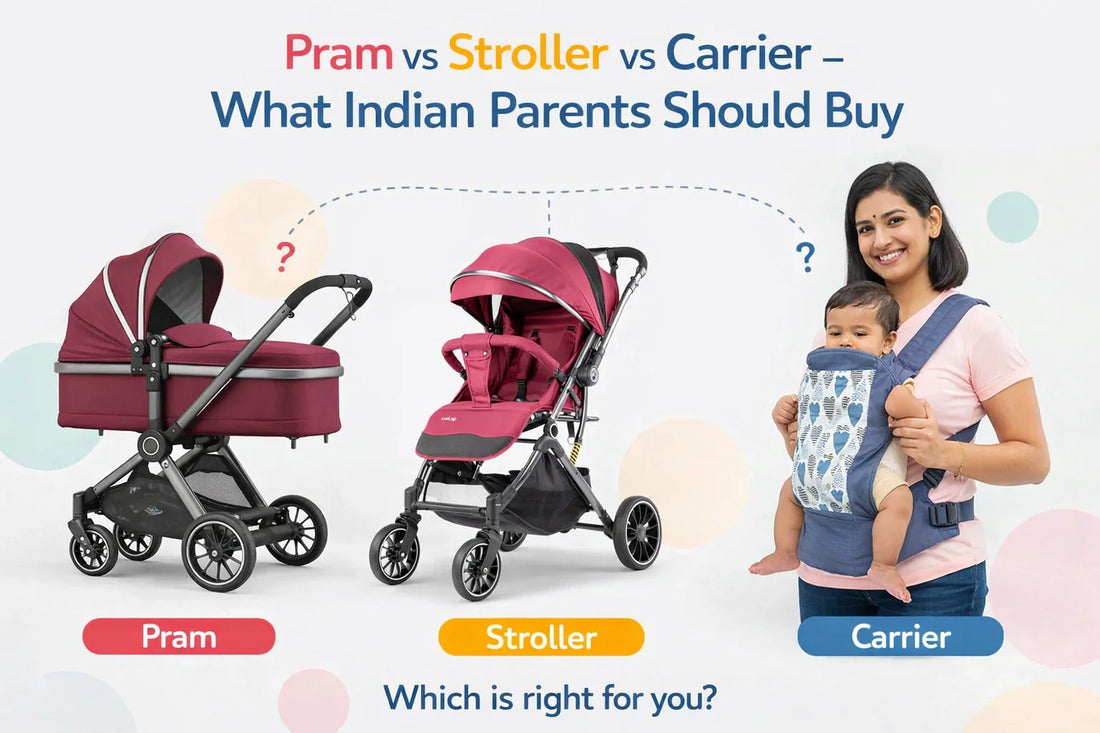
Welcoming a baby into your life in India is one of the most joyful yet overwhelming journeys you’ll ever navigate. Alongside the bigger decisions — feeding choices, sleep routines, vaccinations — comes the question: Which transport gear should I choose for my baby? Among the options on every new parent’s radar are prams, strollers, and baby carriers. Each serves a purpose, but understanding their differences and real-world usefulness is key to smart decision-making.
In this comprehensive baby gear comparison guide, we’ll walk through the difference between pram and stroller India, explore when to use baby carrier vs stroller, help you pick the best travel gear for 6 month old, and highlight what to look for in LuvLap gear for newborns — all with a caring, practical lens that supports your family’s lifestyle.
Understanding the Basics: What Are These Baby Transport Options?
Pram (Short for Perambulator)
A pram is a bassinet-style wheeled bed designed for newborns to lie flat. It’s perfect for the earliest months when your baby’s neck muscles are still developing and flat-on-back positioning is recommended for healthy spine alignment and breathing.
In simple terms: A pram is a baby’s first resting and riding space outside the home.
Stroller
A stroller (or pushchair) is a seated, often adjustable chair on wheels. It’s designed for babies who can sit up independently — typically around 6 months — and is oriented towards mobility and convenience.
In simple terms: A stroller is for moving your baby around comfortably when they can sit up.
Baby Carrier
A baby carrier is a lightweight, wearable device that allows you to carry your baby close to your body — on your chest or back. Carriers support bonding and free your hands to do daily tasks.
In simple terms: A carrier keeps your baby close to you while you’re on the move.
Pram vs Stroller vs Carrier: What’s the Difference for Indian Parents?
1. Age & Physical Needs
-
Pram: Best for newborns to ~6 months (when lying flat is safest).
-
Stroller: Best from 6 months onward (when your baby has head & neck control).
-
Carrier: Ideal from newborn to toddler age, depending on the design.
This helps answer the common question around the difference between pram and stroller India — it isn’t just terminology. Prams are for newborn comfort and sleep; strollers are for active sitting and exploration.
2. Use Case & Lifestyle
-
Pram: Quiet walks, naps on the go, slow shopping outings.
-
Stroller: Daily errands, travel, parks, family outings.
-
Carrier: Crowded places, quick errands, chores at home, bonding time.
3. Parental Comfort
-
Pram: Requires space; best if you have a vehicle or live in spacious apartments.
-
Stroller: Easier to maneuver; compact folding options are ideal for Indian cities.
-
Carrier: Keeps baby close; helps calm fussy infants, but may tire your back if used long.
When to Use Each: Practical Scenarios
Newborn Phase (0–3 Months)
Best Choice: Pram or carrier
Newborns sleep a lot and need flat support. A pram offers a safe and comfortable surface, while a carrier provides closeness and helps reduce stress for both baby and parent.
Tip: If you live in a small flat without frequent long walks, a high-quality carrier may be more practical than a pram that takes up space.
Infant Phase (3–6 Months)
Best Choice: Pram, transitioning to a stroller with recline
At this stage, babies still need support, but they’re curious. A reclining stroller or a pram with a detachable seat can offer flexibility.
Note: Check features that allow you to adjust positions, shielding your baby from sun and wind — especially in Indian climates.
Baby Learns to Sit (6+ Months)
Best Choice: Stroller
This is when many parents start looking for the best travel gear for 6 month old — lightweight, foldable strollers with sun canopies, reclining seats, and storage baskets.
Tip: A sturdy stroller with adjustable seating adds value as your baby explores the world.
Busy Days & Quick Outings
Best Choice: Baby carrier
Whether going up and down stairs, visiting markets, or doing household chores, carriers offer hands-free ease.
Baby Gear Comparison Guide: Pros & Cons
Here’s a friendly breakdown to help you decide:
Pram
Pros
-
Excellent for newborn sleep.
-
Good posture support.
-
Often larger wheels for rough surfaces.
Cons
-
Bulky and harder to store.
-
Less versatile once the baby sits up.
Who It’s Best For: Parents planning frequent walks, park outings, or who prioritize long naps outdoors.
Stroller
Pros
-
Easy to fold and transport.
-
Comfortable for seated babies.
-
Good storage and adjustable features.
Cons
-
Not ideal for newborns unless it reclines fully.
-
Some cheap models may be unstable on rough surfaces.
Who It’s Best For: Families on the go — city walks, travel, shopping, and daily errands.
Baby Carrier
Pros
-
Keeps baby close and soothed.
-
Hands-free convenience.
-
Compact and travel-friendly.
Cons
-
Can strain your back if used excessively.
-
Not ideal for long distances without breaks.
Who It’s Best For: Parents who value closeness and need mobility (stairs, public transport, quick outings).
Safety First - What Every Indian Parent Should Know
Safety isn’t just about gear — it’s about how you use it. Here are essential tips across all three options:
Pram Safety
Flat support for newborn spine health
Lock wheels before placing the baby inside
Use the sun canopy in bright Indian sunlight
Stroller Safety
Always use shoulder and waist harnesses
Lock brakes when parked
Avoid hanging heavy bags on handles (can tip the stroller)
Carrier Safety
Ensure proper positioning (baby’s face visible, chin off chest)
Support infant head and neck in newborn carriers
Alternate carrying positions to avoid fatigue
When to Use Baby Carrier vs Stroller: Real Life Examples
|
Situation |
Best Choice |
Why |
|
Grocery shopping |
Carrier |
Your hands are free |
|
Beach walk |
Stroller |
Baby can enjoy the view |
|
Quick errands |
Carrier |
Fast and compact |
|
Long stroll in park |
Pram or Stroller |
Comfort for baby’s rest |
|
Travel with luggage |
Stroller |
Easier to maneuver |
Best Travel Gear for 6 Month Old - What to Look For
When your baby hits the 6-month milestone, many Indian parents start planning trips — temple visits, vacations, train journeys, or family outings.
Here’s what travel-friendly gear should offer:
1. Lightweight & Foldable
Helps in trains, cars, buses, metros — especially if you’re navigating steps or tight spaces.
2. Comfortable Seating
A stroller with multiple recline angles lets your baby nap or sit upright for sightseeing.
3. All-Terrain Wheels
Useful on uneven sidewalks, parks, and rural paths.
4. Canopy & Protection
Shields from sun, dust, and light rain.
5. Storage
An easy-access basket helps carry essentials — diapers, toys, water.
Choosing LuvLap Gear for Newborns - What’s Worth Considering
Before we dive into specifics, it’s important to say: This section isn’t an advertisement — it’s an honest look at what features matter when seeking gear designed with infants’ developmental needs in mind.
Key Features to Prioritize
Ergonomic support for baby’s spine and head
Durable frame and secure locking mechanisms
Soft cushioning and breathable fabric
Adjustable hoods or sun canopies
Easy fold mechanism for urban travel
In the Indian context, adaptability matters. Whether you’re navigating Kolkata’s busy sidewalks, Delhi’s open parks, or Chennai’s coastal breezes, choosing gear that can handle different surfaces and climates is valuable.
When evaluating LuvLap gear for newborns, look for:
-
Flat bassinet or full recline options for early months
-
Smooth wheel action for uneven pavements
-
Safety harnesses that are intuitive and secure
-
Washable fabrics — essential for everyday use in humid or dusty conditions
Buying Tips for Indian Parents
Here are real-world considerations before you make the purchase:
Budget Wisely
Higher price doesn’t always mean better quality. Consider the features you actually need.
Test Maneuverability
If possible, visit a store and try folding, steering, and parking the pram/stroller.
Think Long-Term
Some parents start with a carrier and later add a stroller — that’s perfectly fine. You don’t have to buy everything at once.
Check After-Sales and Warranty
Indian weather, dust, and heavy use mean after-sales support matters.
Consider Growth
Some strollers convert or have adjustable canopies and seats. Gear that grows with your child is often more economical.
FAQ – Indian Parents’ Most Asked Questions
1. What’s the main difference between a pram and stroller?
A pram is bassinet-style for newborns (lying flat), while a stroller is seated, adjustable, and better suited once your baby can sit independently — typically around 6 months.
2. Can I use a stroller from birth?
Only if it fully reclines and offers sufficient neck/head support. Many parents choose a pram or a newborn-friendly carrier for the first few months.
3. When should I switch from carrier to stroller?
You can use a stroller anytime, but most babies transition around 6 months, when they have good head and neck control.
4. Is a baby carrier safe for newborns?
Yes, if it supports the M-position (knees higher than bum) and keeps the airway clear. Always follow manufacturer instructions.
5. What is the best travel gear for 6 month old in India?
A lightweight stroller with sun protection, good wheels, and easy fold design works best for urban and semi-urban travel across Indian terrains.
6. Do I need all three — pram, stroller, and carrier?
Not always. Many parents start with a carrier and pram, then transition to a stroller. Your lifestyle and travel needs determine what’s essential.
7. How do I choose baby gear that’s worth the money?
Look for ergonomic design, safety certifications, durability, and features that match your daily life — not just flashy extras.
Final Thoughts
There’s no single “right” choice for every family. The best gear is the one that makes life easier, keeps your baby safe and comfortable, and fits your routine — whether that’s navigating city sidewalks, visiting relatives, or taking long countryside walks.
If you’re still undecided, here’s a simple strategy:
Newborn focus: Pram + Carrier
Mobile baby (6m+): Stroller + occasional Carrier
Travel & errands: Stroller + Carrier for quick moves
Remember - gear supports your parenting, but your loving presence is what truly matters.


