
Loading views... Views
How to Soothe a Crying Baby Naturally

There is perhaps no sound more piercing to a parent’s heart—or more exhausting to their nervous system, than the persistent cry of a newborn. If you are reading this in the middle of the night, rocking a restless infant with heavy eyes, know that you are not alone.
Crying is your baby’s first language. It is their only way to communicate hunger, discomfort, fatigue, or a simple need for connection. However, when the usual checks (diaper, feeding, temperature) are done and the crying continues, it can feel overwhelming.
At LuvLap, we believe in nurturing the bond between parent and child through safe, science-backed, and soul-soothing methods. In this guide, we will explore how to soothe a crying baby naturally, drawing on time-tested techniques and modern pediatric insights to help you and your little one find peace.
Understanding the "Fourth Trimester"
To soothe a baby naturally, we must first understand their perspective. The transition from the warm, dark, and rhythmic environment of the womb to the bright, loud, and vast world is a massive shock. Many experts refer to the first three months of life as the "Fourth Trimester."
During this phase, babies aren't looking for independence; they are looking for a "womb with a view." Most natural soothing techniques work because they mimic the sensory experiences of the uterus.
The Gold Standard: The 5 S’s for Baby Sleep and Comfort
Developed by Dr. Harvey Karp, the 5 S’s for baby sleep and soothing are designed to trigger the "calming reflex"—an automatic off-switch for crying that all infants are born with.
1. Swaddling
In the womb, babies are snugly tucked. After birth, their own "Moro reflex" (the startle reflex) can cause their arms to flail, waking them up or keeping them agitated. A snug swaddle provides the resistance they are used to, making them feel secure. Ensure the hips are loose to prevent dysplasia, but keep the arms tucked firmly.
2. Side or Stomach Position
While the back is the only safe position for sleep, it is often the worst position for soothing a crying baby. Holding a baby on their side or stomach-down across your forearm (the "football hold") can help settle their nervous system. Once they are calm or asleep, always transition them to their back on a firm surface.
3. Shushing (White Noise)
The womb is not quiet; it’s louder than a vacuum cleaner due to the constant blood flow through the placenta. Silence can actually be unsettling for a newborn. This is why white noise for baby sleep in India has become such a vital tool for modern parents. A consistent, low-frequency "shhh" sound mimics the whooshing of the womb.
4. Swinging
Babies are used to constant motion. Every time a mother moves, walks, or even breathes, the baby is rocked. Gentle, rhythmic movement is a powerful sedative for a fussy infant.
5. Sucking
Whether it’s a clean finger, a pacifier, or breastfeeding, sucking lowers a baby’s heart rate and helps them organize their neurological response to stress.
The Power of Rhythmic Motion
Movement is perhaps the most instinctive tool a parent has. However, there is a vital distinction to be made: gentle rocking vs. aggressive shaking.
Gentle Rocking
Gentle motion helps develop the baby’s vestibular system (the inner ear's balance center). This can be achieved through:
-
The Parent Sway: Holding the baby close and swaying side-to-side.
-
Babywearing: Using a carrier to keep the baby upright and moving with your body.
-
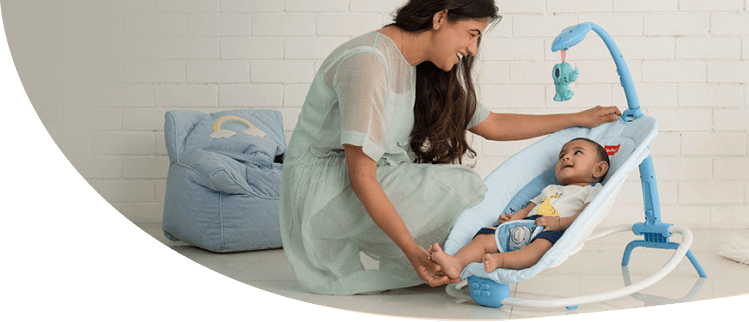
Technology-Assisted Soothing: Many parents find relief using an LuvLap automatic baby swing. These devices provide a consistent, side-to-side motion that mimics a parent’s natural sway. The integration of LuvLap automatic baby swing music—often featuring nature sounds or soft lullabies—combines the benefits of motion with the power of auditory soothing.
A Note on Safety: Never Shake a Baby
It is crucial to address that in moments of extreme frustration, a parent might feel the urge to move the baby more vigorously to get them to stop crying. Aggressive shaking is extremely dangerous and can lead to Shaken Baby Syndrome, causing permanent brain injury. If you feel your frustration rising, it is perfectly okay—and recommended—to place your baby in a safe crib, walk out of the room, and breathe for five minutes before returning.
Sensory Soothing: White Noise and Soundscapes
In India, our homes are often vibrant and bustling with multi-generational activity. While this is wonderful for a child’s social development, the ambient noise (traffic, kitchen sounds, loud conversations) can overstimulate a newborn.
This is where white noise for baby sleep in India plays a specific role. It acts as a "sound blanket," masking sudden spikes in household noise that might startle a sleeping infant. Natural white noise can include:
-
A steady fan (not pointed directly at the baby).
-
A dedicated white noise machine.
-
Rain sounds or "pink noise" which has a softer frequency.
The LuvLap automatic baby swing music settings are specifically curated to provide these calming frequencies, ensuring the baby remains in a "sensory bubble" that promotes deeper sleep.
The "Touch" Therapy: Skin-to-Skin and Massage
Nature’s most effective medicine is human touch.
Kangaroo Care (Skin-to-Skin)
Placing your baby, dressed only in a diaper, against your bare chest helps regulate their body temperature, heart rate, and breathing. The scent of the parent and the sound of a familiar heartbeat act as a powerful natural tranquilizer.
Baby Massage
In Indian tradition, Maalish (baby massage) is a sacred ritual. Using natural oils like coconut or almond oil, gentle strokes can help relieve gas (a common cause of crying) and promote the release of oxytocin—the "love hormone"—in both the parent and the child. Focus on the tummy with "I Love You" strokes (clockwise) to help move any trapped bubbles through the digestive tract.
Dietary and Digestive Considerations
Sometimes, a baby cries because their digestive system is still maturing.
-
Burping: Often, "unexplained" crying is simply a trapped air bubble. Try different positions: over the shoulder, sitting on your lap while supporting the chin, or laying them across your knees.
-
The "Colic Carry": Lay the baby face down on your forearm, with their head in your hand and legs straddling your elbow. The gentle pressure on the tummy can provide immense relief from gas.
-
Check for Overstimulation: Sometimes we try too hard to soothe. If the lights are bright and three people are trying to bounce the baby, they may be overstimulated. Try taking them into a dark, quiet room.
The Caregiver's Mental Health: The Secret Ingredient
You cannot pour from an empty cup. A baby is incredibly sensitive to the cortisol (stress hormone) levels of their caregiver. If you are tense, your baby will feel that tension in your muscles and hear it in your voice.
-
Shared Responsibility: Don't hesitate to pass the baby to a partner or family member.
-
Mindful Breathing: When holding a crying baby, practice deep belly breathing. It lowers your heart rate, which the baby will eventually mirror.
-
Lower Your Expectations: Some days, the only thing you will accomplish is holding your baby. That is enough.
Summary of Natural Soothing Techniques
|
Method |
Why it Works |
How to Implement |
|
Swaddling |
Prevents startle reflex |
Use a soft cotton cloth; keep hips loose. |
|
White Noise |
Mimics womb sounds |
Use a fan or LuvLap swing music. |
|
Rhythmic Motion |
Vestibular calming |
Swaying, babywearing, or an automatic swing. |
|
Skin-to-Skin |
Regulates vitals |
Place baby on bare chest for 20 mins. |
|
Sucking |
Neurological organization |
Offer a breast, finger, or pacifier. |
Conclusion: Trust Your Instincts
Learning how to soothe a crying baby naturally is a journey of trial and error. What works on Monday might not work on Tuesday. However, by staying calm and utilizing the "5 S's" for baby sleep—starting with a snug wrap using LuvLap 100% Cotton Muslin Swaddles—you are building a foundation of trust and security.
Remember, you are the world to your baby. Your presence, your scent, and your gentle care are the most powerful tools in your parenting toolkit. Whether you are using a traditional swaddle or the modern convenience of the LuvLap Delight Electric Baby Swing or the Joy-N-Giggles Baby Rocker, your goal is the same: to provide a "soft landing" for your little one as they navigate their new world. For those moments of physical discomfort, a gentle massage with LuvLap Naturals Tummy Roll-On can provide that extra layer of natural relief.
Be patient with your baby, and more importantly, be patient with yourself. This phase is intense, but it is temporary. Soon, these cries will turn into babbles, and those babbles into "I love you."


